

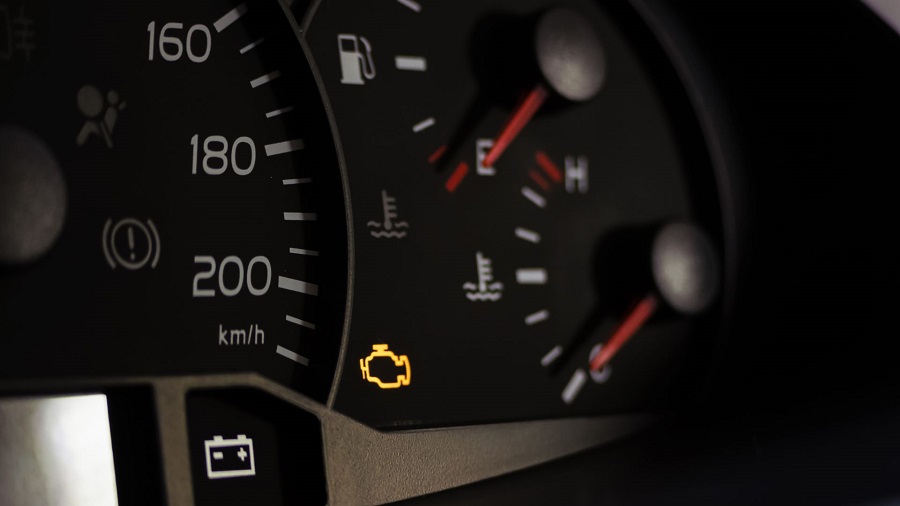
Few dashboard warnings trigger more mental gymnastics than a check engine light that refuses to make up its mind. It flares to life during a Tuesday morning commute, stays illuminated while you run errands, and then mysteriously vanishes by Thursday afternoon. The natural human reaction is quiet relief, quickly followed by rationalization: maybe it was bad gas, a temporary software glitch, or a loose sensor wire that jostled back into place.
Unfortunately, modern automotive computers do not trigger warning lights on a whim, nor do internal combustion engines heal themselves in parking lots. When a check engine light cycles on and off without an obvious pattern, your vehicle is delivering a specific message: an operating parameter is slipping outside factory tolerance, but only under particular operating conditions. Ignoring the issue simply because the dashboard went dark often turns a minor sensor replacement into an expensive mechanical failure.
Understanding why that light appears and disappears requires looking behind the instrument cluster at how onboard diagnostic systems actually evaluate vehicle health.
The Logic Behind the Disappearing Light
To make sense of an intermittent light, you first need to understand the computer architecture that governs it. Modern vehicles rely on the second-generation onboard diagnostics system, known universally as OBD-II. The vehicle engine control unit (ECU) constantly monitors dozens of sensors and subsystems, comparing incoming data streams against strict programmed thresholds.
Automotive engineers recognized that real-world driving produces temporary anomalies. A rough patch of asphalt can cause a momentary driveline vibration, a sudden cold snap can drop intake temperatures, or a brief hesitation in fuel pressure might occur during sudden throttle changes. If the computer triggered a warning light for every single abnormal reading, drivers would live in a state of permanent panic.
To prevent false alarms, the ECU relies on two-trip detection logic. When a sensor reports an out-of-spec reading during a trip, the computer does not immediately turn on the light. Instead, it logs the event as a pending code. If that exact fault occurs again during a subsequent drive cycle under similar operating parameters—such as engine temperature, calculated load, and road speed—the computer promotes the fault to an active code and illuminates the amber warning light.
The clearing mechanism operates on the same logic in reverse. If you complete three or four consecutive drive cycles where the specific diagnostic test runs and passes without detecting the fault, the ECU automatically turns the warning light off. Crucially, this does not mean the problem was fixed. The computer simply shifts the diagnostic trouble code into a stored or historical code registry in its internal memory, where it stays until cleared with a scan tool or overwritten after dozens of clean warm-up cycles.
Common Culprits Behind an Intermittent Check Engine Light
Because the warning light only illuminates when specific mechanical and environmental variables align, a handful of components are notorious for creating this random on-and-off cycle.
The Evaporative Emission Control (EVAP) System
The EVAP system captures raw fuel vapors from the gas tank and routes them into the engine intake to be burned, preventing volatile organic compounds from venting into the atmosphere. While an improperly tightened gas cap is the most common cause of an EVAP fault, its intermittent behavior confuses many drivers.
The reason for the randomness is test criteria: the ECU does not test the EVAP system constantly. Most vehicles only initiate an EVAP vacuum or pressure test when the fuel tank is between roughly 15% and 85% full, the engine has been sitting cold overnight, and ambient temperatures fall within a moderate window. If your gas cap rubber seal is dry-rotted or cracked, it might hold sufficient vacuum during warm afternoons, yet leak just enough to fail when the temperature drops overnight. Once you burn through fuel or driving conditions change, the computer ceases running that specific monitor, and the light eventually clears.
Sluggish Oxygen and Air-Fuel Sensors
Oxygen sensors live directly in the harsh exhaust stream, measuring unburned oxygen exiting the cylinders so the ECU can balance the fuel-air mixture. As these sensors age, their internal zirconia or titania elements degrade, coating with carbon and exhaust contaminants. Instead of switching rapidly between rich and lean readings within fractions of a second, their response time slows down.
A sluggish sensor often behaves well enough during gentle stop-and-go city driving to stay within acceptable parameters. But subject it to sustained heat and flow during a long highway trip, or demand sudden throttle response while merging, and its delayed signal will exceed the computer’s allowed latency threshold. Once you return to mild, short-distance driving, the sensor may operate just adequately enough to pass several consecutive warm-up cycles, turning the light back off until your next long highway drive.
Borderline Catalytic Converter Efficiency
The catalytic converter cleans carbon monoxide, hydrocarbons, and nitrogen oxides from exhaust gases. When a converter begins to lose its internal precious-metal coating, it often enters an extended phase of borderline efficiency, routinely triggering the well-known P0420 or P0430 diagnostic trouble code.
The computer evaluates converter health by comparing readings from the upstream oxygen sensor against a downstream sensor behind the catalyst. This calculation requires very specific operating parameters: a fully warmed engine, steady vehicle speed between 45 and 65 mph, and light, constant throttle. If you only commute on surface streets during the workweek, the computer may never run the efficiency monitor, allowing the light to extinguish. Take the highway over the weekend, the monitor runs and fails, and the amber glow returns on Monday morning.
Intermittent Misfires Under High Load or Moisture
A severe, continuous engine misfire flashes the check engine light rapidly to warn that unburned fuel is entering the exhaust, which can melt a catalytic converter within minutes. Minor or borderline misfires, however, produce a solid light that comes and goes.
Worn spark plugs with widened gaps, or ignition coils suffering from microscopic insulation hairline cracks, frequently operate without issue at idle and gentle cruising speeds. But when you ask the engine to climb a steep highway incline in top gear, the increased cylinder pressure demands a higher secondary voltage to jump the spark plug gap. The weakened coil or plug breaks down, causing a momentary misfire that registers with the ECU. Once the grade flattens and engine load drops, the misfire ceases, allowing the warning light to reset a few driving cycles later. Similar intermittent faults happen on damp, foggy mornings when ambient moisture condenses around aging ignition wires and boots.
Thermostat Rationality and Coolant Temperature Swings
Modern emissions regulations require your engine to reach its closed-loop operating temperature—typically around 195 to 205 degrees Fahrenheit—within a strictly calculated timeframe after starting. If your engine thermostat is beginning to stick partially open, coolant circulates through the radiator prematurely.
During warm summer weather, the ambient temperature helps the engine warm up quickly enough to satisfy the computer. On a freezing winter morning, however, the continuous coolant flow keeps the engine cold past the allowable time limit, causing the ECU to flag a coolant temperature rationality code. When milder weather returns a few days later, the warm-up cycle finishes on time, and the light switches off on its own.
The Hidden Risks of an Intermittent Warning Light
Because the light turns off on its own, drivers routinely assume the issue is benign. That assumption is an expensive gamble.
When the ECU detects an active fault in critical systems like fuel delivery or ignition timing, it often defaults to a conservative, open-loop operating map. This safety measure deliberately enriches the fuel mixture to prevent engine knock and overheating. While this protects internal engine components, running rich washes excess fuel into the exhaust, where it superheats and destroys the catalytic converter. A problem that could have been resolved with a new thermostat or an ignition coil can quickly escalate into a multi-thousand-dollar exhaust repair.
An intermittent light also causes sudden headaches during state vehicle inspections. When testing facilities connect to your car’s OBD-II port, their diagnostic equipment reads your internal readiness monitors. Every time the computer detects a fault or resets, those readiness monitors clear. If your vehicle arrives at the testing bay with unready monitors, you will receive an automatic inspection failure, regardless of whether the light happens to be dark at that exact moment.
How to Diagnose the Issue When the Light Is Off
You do not have to wait for the light to return to track down the root cause. Even when your dashboard is completely clear, your vehicle retains a digital paper trail.
Plugging an OBD-II scanner into the diagnostic port under your dashboard allows you to scan for stored codes and pending codes. A pending code reveals an issue that occurred recently but has not yet met the two-trip criteria required to trigger the dash light, giving you early warning before the problem escalates.
Quality scan tools can also retrieve freeze frame data. Freeze frame data is an electronic snapshot captured the precise millisecond a fault was logged. It records vehicle speed, engine RPM, coolant temperature, intake air temperature, calculated engine load, and short- and long-term fuel trim percentages.
If the freeze frame data reveals that the fault set at 2,200 RPM, 65 mph, with coolant temperature at 200 degrees, you immediately know the problem occurs during steady highway cruising, ruling out cold-start issues or idling quirks. Conversely, if the freeze frame shows an ambient temperature of 25 degrees and zero road speed, you can focus your attention on cold-start enrichment or cold-weather vacuum leaks.
Paying attention to when the light appears is just as valuable as using a scanner. Take note of whether the light tends to illuminate after driving through heavy rain, right after filling the gas tank, during hard acceleration, or on cold morning starts. Pairing these real-world driving observations with stored diagnostic trouble codes takes the guesswork out of troubleshooting, turning a frustrating dashboard mystery into a straightforward repair.